סריקה בתהליך...
הניתוח עשוי לארוך 30–90 שניות
הידעת?
הסרטון אינו מכיל תוכן רפואי
חושבים שחלה טעות?
אם לדעתכם הסרטון אכן עוסק בטענות רפואיות או בריאותיות, הוסיפו הסבר קצר ושלחו בקשה לבדיקה מחדש.
הבקשה התקבלה! נבדוק את הסרטון ונחזור אליכם.
אירעה שגיאה בשליחת הבקשה. נסו שוב.
דו״ח מאומת
הסרטון מציג מידע מדויק ומגובה במחקרים מדעיים אמינים.
סיכום
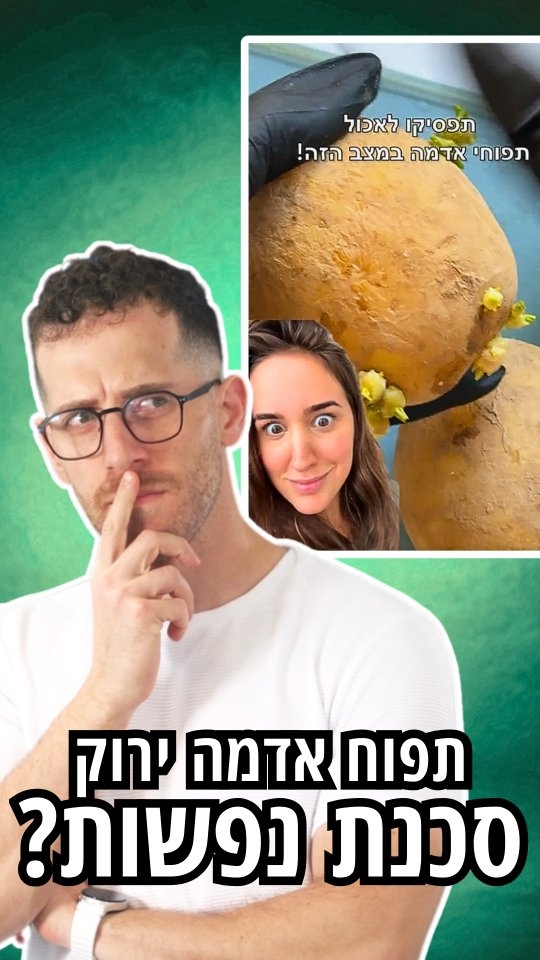
הקליפ הציג מידע על הסכנות הטמונות בתפוחי אדמה ירוקים או מונבטים, והמומחה אישר את הטענות הללו והרחיב על המנגנון הביולוגי של ייצור הסולנין כחלק ממערכת ההגנה של הצמח. הממצאים המדעיים תומכים ברוב דברי המומחה, כולל הקשר בין חשיפה לאור, צבע ירוק ורעילות, וכן בהמלצה להפסיק לאכול במקרה של טעם מר. עם זאת, הטענה שבישול מפחית את רמות הסולנין בצורה משמעותית מוטלת בספק, שכן מדובר בתרכובות עמידות בחום שאינן מתפרקות בקלות בשיטות בישול ביתיות.
דוח על סרטון תגובה
סרטון זה מציג קליפ של אדם המביע טענות רפואיות, ומומחה/מגיב שמתייחס אליהן. הציון מבוסס רק על טענות המומחה.
quiz טענות הקליפ ותגובת המומחה
"תפסיקו לאכול תפוחי אדמה במצב הזה!"
"אם מרגישים טעם מר או תחושת צריבה בפה, מומלץ להפסיק לאכול."
המומחה מספק הנחיה מעשית מתי להפסיק לאכול, כתגובה לקריאה הכללית להפסיק לאכול.
מסקנת הבדיקה:
טעם מר ותחושת צריבה בפה הם אינדיקטורים חושיים מוכרים לרמות גבוהות של גליקואלקלואידים, והפסקת האכילה במקרה זה היא המלצה בטיחותית מקובלת. (🟩)
"תפוחי אדמה ירוקים או עם נבטים מכילים רעלים וזה ממש מזיק לגוף."
"תפוחי אדמה ירוקים או עם נבטים יכולים לגרום להרעלה."
המומחה מאשר את הטענה שהם מכילים רעלים ומסביר את הקשר להרעלה.
מסקנת הבדיקה:
הספרות המדעית מאשרת כי תפוחי אדמה ירוקים או מונבטים מכילים רמות גבוהות של גליקואלקלואידים, כגון סולנין, אשר עלולים לגרום להרעלה חריפה בבני אדם. (🟩)
person_check טענות נוספות של המומחה
טענות שהמומחה הביע שאינן קשורות ישירות לטענה ספציפית בקליפ
"בישול, אפייה, צלייה וחימום במיקרוגל עוזרים להקטין את רמות הסולנין בצורה משמעותית."
מסקנת הבדיקה:
גליקואלקלואידים הם תרכובות עמידות בחום, ושיטות בישול סטנדרטיות אינן מפרקות אותם באופן מלא או משמעותי מספיק כדי להבטיח בטיחות במקרה של רמות רעילות גבוהות. (🟨)
chevron_right מקורות מדעיים: (2)
-
link
Naturally Occurring Plant Food Toxicants and the Role of Food Processing Methods in Their Detoxification.
Some plant foods evolve defense mechanisms to protect themselves from predators by producing inherent chemicals as secondary metabolites such as cyanogenic glycosides, glycoalkaloids, glucosinolates, pyrrolizidine alkaloids, and lectins. These metabolites are beneficial for the plant itself but toxic to other organisms, including human beings. Some of these toxic chemicals are believed to have therapeutic benefits and are therefore used to protect against chronic health complications such as cancer. Inversely, short- and long-term exposure to significant amounts of these phytotoxins may end up with chronic irreversible negative health problems in important organ systems, and in severe cases, they can be carcinogenic and fatal. A systematic literature search of relevant published articles indexed in Google Scholar®, PubMed®, Scopus®, Springer Link®, Web of Science®, MDPI®, and ScienceDirect databases was used to obtain the necessary information. Various traditional and emerging food-processing techniques have been found to considerably reduce most of the toxicants in the food to their safest level. Despite their ability to preserve the nutritional value of processed foods, emerging food processing methods have limited application and accessibility in middle- and low-income countries. As a consequence, much more work is recommended on the implementation of emerging technologies, with additional scientific work on food processing methods that are effective against these naturally occurring plant food toxicants, particularly pyrrolizidine alkaloids.…
PMID: 37153649
-
link
Risk assessment of glycoalkaloids in feed and food, in particular in potatoes and potato-derived products.
The European Commission asked EFSA for a scientific opinion on the risks for animal and human health related to the presence of glycoalkaloids (GAs) in feed and food. This risk assessment covers edible parts of potato plants and other food plants containing GAs, in particular, tomato and aubergine. In humans, acute toxic effects of potato GAs (α-solanine and α-chaconine) include gastrointestinal symptoms such as nausea, vomiting and diarrhoea. For these effects, the CONTAM Panel identified a lowest-observed-adverse-effect level of 1 mg total potato GAs/kg body weight (bw) per day as a reference point for the risk characterisation following acute exposure. In humans, no evidence of health problems associated with repeated or long-term intake of GAs via potatoes has been identified. No reference point for chronic exposure could be identified from the experimental animal studies. Occurrence data were available only for α-solanine and α-chaconine, mostly for potatoes. The acute dietary exposure to potato GAs was estimated using a probabilistic approach and applying processing factors for food. Due to the limited data available, a margin of exposure (MOE) approach was applied. The MOEs for the younger age groups indicate a health concern for the food consumption surveys with the highest mean exposure, as well as for the P95 exposure in all surveys. For adult age groups, the MOEs indicate a health concern only for the food consumption surveys with the highest P95 exposures. For tomato and aubergine GAs, the risk to human health could not be characterised due to the lack of occurrence data and the limited toxicity data. For horses, farm and companion animals, no risk characterisation for potato GAs could be performed due to insufficient data on occurrence in feed and on potential adverse effects of GAs in these species.…
PMID: 32788943
"הצבע הירוק הוא כלורופיל, אך הוא מעיד על חשיפה לאור שמעודדת ייצור סולנין."
מסקנת הבדיקה:
חשיפה לאור מעודדת במקביל את ייצור הכלורופיל, המעניק את הצבע הירוק, ואת הביוסינתזה של סולנין בתפוחי אדמה כחלק מתגובה פיזיולוגית של הצמח. (🟩)
chevron_right מקורות מדעיים: (2)
-
link
Analysis of DNA methylation in potato tuber in response to light exposure during storage.
Exposure to light induces tuber greening and the accumulation of the toxic alkaloid Solanine in potato (Solanum tuberosum L) during storage greatly reduce tuber value. While the mechanism of this greening process remains unclear, it is well understood that DNA methylation plays an important role in regulating gene expression in response to environmental conditions. In this study, methylation-sensitive amplified polymorphism was used to assess the effect of light exposure on DNA methylation during storage of potato tubers. Light-induced genome-wide DNA demethylation and the rate of DNA methylation decreased with long storage times. Following, the sequencing of 14 differentially amplified fragments and analysis using the Basic Local Alignment Search Tool, eight genomic sequences and six annotated fragment sequences were identified. The latter included ADP glucose pyrophosphorylase 1/2, chlorophyllide a oxygenase 1 (CAO1), receptor-like protein kinase HAIKU2, and repressor of GA4, all of which are involved in starch biosynthesis, chlorophyll synthesis, endosperm development, and gibberellic acid signaling, respectively. Demethylation was observed in the CpG island (-273 to -166 bp) of the CAO1 promoter in response to light, which further confirmed that the variations in genome methylation are dependent upon the light exposure and suggests a direct role for DNA methylation. Our results provide an epigenetic perspective for further exploring the mechanism of light-induced tuber greening.…
PMID: 34906904
-
link
Physiological and Molecular Mechanisms of Light-Induced Greening in Potatoes: A Path to Food Safety.
The potato (<i>Solanum tuberosum</i> L.) ranks among the most consumed agricultural products globally and is nutrient-rich. Exposure of potato tubers' epidermal and subcutaneous tissues to light results in greening and the production of neurotoxic steroidal glycoalkaloids, which significantly reduces tuber quality, increases food safety risks, and leads to rejection by consumers and the processing industry. This review conducts an in-depth analysis of three key aspects: (1) the differences in various light conditions, namely, the disparities in light sources, wavelengths, intensities, and durations; (2) the characteristics of potato cultivars resistant to greening; and (3) the molecular mechanisms of light-induced biosynthesis of chlorophyll and steroidal glycoalkaloids (SGAs). This review is expected to provide technical support for potato food safety measures and a theoretical foundation for the molecular breeding of green-resistant potato varieties.…
PMID: 40428577
"סולנין הוא רעל טבעי שהצמח מייצר כדי להגן על עצמו ממזיקים."
מסקנת הבדיקה:
סולנין הוא מטבוליט משני המיוצר על ידי הצמח כחלק ממנגנון הגנה כימי טבעי נגד מזיקים, חרקים ופתוגנים. (🟩)
chevron_right מקורות מדעיים: (2)
-
link
Identification and functional characterization of a beta-glucosidase gene involved in solanine degradation in the ladybird beetle Henosepilachna vigintioctopunctata.
Solanaceous plants synthesize the alkaloid alpha-solanine as a chemical defense against herbivorous insects. The plant feeder ladybird Henosepilachna vigintioctopunctata (Coleoptera: Coccinellidae), specialized on solanaceous hosts, causes significant economic losses to solanaceous crops such as potato, tomato and eggplant through its voracious feeding activity. However, little is known about the underlying adaptive mechanisms that enable Henosepilachna vigintioctopunctata to neutralize this plant toxin. Here, through transcriptome analysis and quantitative polymerase chain reaction (qPCR) validation, we identified a beta-glucosidase gene, HvBgla1, that is significantly up-regulated in response to alpha-solanine ingestion, with particularly high expression observed in midgut tissues. RNA interference (RNAi) mediated silencing of HvBgla1 reduced alpha-solanine degradation, leading to toxin accumulation in the midgut and hindgut. This was accompanied by a decrease in the degradation product solanidine in the midgut, and a reduction in the body weight of newly emerged adults from RNAi-treated larvae. Additionally, phylogenetic analysis revealed that HvBgla1 originated from a lineage-specific duplication clade exclusive to the tribe Epilachnini. These findings suggest that HvBgla1 plays a crucial role in alpha-solanine detoxification, allowing Henosepilachna vigintioctopunctata to overcome solanaceous plant defenses. © 2026 Society of Chemical Industry.…
PMID: 41502025
-
link
Characterization and Potential Role of Fatty Acid-Solamine Conjugates in Plant Defense against Herbivores and Pathogens in Wild Potato Species.
The fatty acid-solamine conjugate C16:3(7<i>Z</i>,10<i>Z</i>,13<i>Z</i>)-solamine was isolated from leaves of the wild potato species <i>Solanum bulbocastanum</i> and structurally characterized using spectroscopic methods. The exogenous application of C16:3(7<i>Z</i>,10<i>Z</i>,13<i>Z</i>)-solamine reduced the feeding of Colorado potato beetles (<i>Leptinotarsa decemlineata</i>) and potato flea beetles (<i>Epitrix papa</i>) on <i>Solanum tuberosum</i> leaf disks and inhibited the germination of sporangia produced by the oomycete pathogen <i>Phytophthora infestans</i> and subsequent plant infection. The use of liquid chromatography-coupled tandem mass spectrometry enabled the detection and characterization of numerous acyl solamines in <i>S. bulbocastanum</i> leaves and in the belowground organs of numerous accessions of eight wild potato species and of cultivars of <i>S. tuberosum</i>. The annotated acyl solamines comprise medium- and long-chain fatty acyl solamines, whose acyl groups differ in chain length, the number of double bond equivalents, and the number of oxygenations, as well as hydroxycinnamoyl solamines. The profiles of the detected acyl solamines exhibited notable variation between different <i>Solanum</i> species, as well as between different tissues within a species. The potential role of acyl solamines in plant defense and their potential utility in plant protection and resistance breeding are discussed.…
PMID: 40413644

Jordan Ovadia | ירדן עובדיה
דירוג זה מבוסס על 6 דוחות אימות קודמים.
האם הדוח הזה היה מועיל לך?
מה היה פחות טוב? (רשות)
תודה על הפידבק!
עירעור על דוח זה
ספקו ראיות חדשות או הצביעו על אי דיוקים
נעדכן אותך על תוצאות הבדיקה
הוסיפו קישורים למחקרים או מקורות רפואיים מוכרים
העירעור נשלח בהצלחה!
המנוע המדעי שלנו יבדוק את הראיות שהגשתם. נעדכן אתכם באימייל עם התוצאות.
ניתוח מבוסס בינה מלאכותית
דוח זה נוצר באופן אוטומטי על ידי מערכת בינה מלאכותית ועשוי להכיל שגיאות, אי-דיוקים או מידע חלקי. הניתוח אינו מהווה ייעוץ רפואי, אבחנה או המלצה לטיפול, והוא אינו תחליף לדעתו של איש מקצוע רפואי מוסמך. יש להתייעץ עם רופא או מומחה מוסמך לפני קבלת כל החלטה רפואית. המידע מוצג לצרכי מידע כללי בלבד.
מידע זה מופק על ידי בינה מלאכותית ואינו מהווה תחליף לייעוץ רפואי מקצועי.