סריקה בתהליך...
הניתוח עשוי לארוך 30–90 שניות
הידעת?
הסרטון אינו מכיל תוכן רפואי
חושבים שחלה טעות?
אם לדעתכם הסרטון אכן עוסק בטענות רפואיות או בריאותיות, הוסיפו הסבר קצר ושלחו בקשה לבדיקה מחדש.
הבקשה התקבלה! נבדוק את הסרטון ונחזור אליכם.
אירעה שגיאה בשליחת הבקשה. נסו שוב.
דו״ח מאומת
הסרטון מציג מידע מדויק ומגובה במחקרים מדעיים אמינים.
סיכום
רוב הטענות המוצגות נתמכות על ידי ספרות מדעית עדכנית בתחום המיקרו-פלסטיק. הטענות בנוגע לזיהום מים בבקבוקים, שחרור סיבים מבגדים, שחרור חלקיקים משקיקי תה ויעילות אוסמוזה הפוכה מגובות במחקרים. עם זאת, הטענה בדבר הפחתת מיקרו-פלסטיק בדם באמצעות סאונה אינה מגובה בראיות מדעיות ואין לה בסיס בספרות המקצועית.
analytics ניתוח טענות מבוסס ראיות
"שקיק תה מפלסטיק משחרר 11 מיליארד חלקיקי מיקרו-פלסטיק לכוס."
מסקנת הבדיקה:
מחקרים מדעיים מצאו כי שקיקי תה העשויים מפלסטיק משחררים מיליארדי חלקיקי מיקרו-פלסטיק וננו-פלסטיק לתוך המים בטמפרטורות חליטה, מה שתואם את הטענה המדוברת. (🟩)
chevron_right מקורות מדעיים: (3)
-
link
Detecting Micro- and Nanoplastics Released from Food Packaging: Challenges and Analytical Strategies.
Micro- and nanoplastic (pMP and pNP, respectively) release is an emerging issue since these particles constitute a ubiquitous and growing pollutant, which not only threatens the environment but may have potential consequences for human health. In particular, there is concern about the release of secondary pMP and pNP from the degradation of plastic consumer products. The phenomenon is well-documented in relation to plastic waste in the environment but, more recently, reports of pMP generated even during the normal use of plastic food contact materials, such as water bottles, tea bags, and containers, have been published. So far, a validated and harmonized strategy to tackle the issue is not available. In this study, we demonstrate that plastic breakdown to pMP and pNP can occur during the normal use of polyethylene (PE) rice cooking bags and ice-cube bags as well as of nylon teabags. A multi-instrumental approach based on Raman microscopy, X-ray photoelectron spectroscopy (XPS), scanning electron microscopy (SEM), and particular attention on the importance of sample preparation were applied to evaluate the chemical nature of the released material and their morphology. In addition, a simple method based on Fourier transform infrared (FT-IR) spectroscopy is proposed for pNP mass quantification, resulting in the release of 1.13 ± 0.07 mg of nylon 6 from each teabag. However, temperature was shown to have a strong impact on the morphology and aggregation status of the released materials, posing to scientists and legislators a challenging question: are they micro- or nanoplastics or something else altogether?…
PMID: 35335568
-
link
Impact of polyethylene terephthalate and polylactic acid nanoplastics on cellular uptake and lipid metabolism in differentiated 3T3-L1 adipocytes.
Hazards of nanoplastics (NPls) have recently garnered concern because of their tiny size and widespread existence in the environment and daily life. Evidence indicates that the frequently used model particle polystyrene NPls can accumulate in adipose tissues of mice and disrupt lipid metabolism, which is a potential obesogen. However, NPl uptake mechanisms and their potential interference with energy homeostasis of adipocytes by other NPl types are still unknown. In this study, polyethylene terephthalate (PET) and polylactic acid (PLA)-NPls which were shown to abundantly be released from plastic tea bags at brewing temperatures-were selected to study the abovementioned issues in 3T3-L1 adipocytes. We found that similar sized self-synthesized PET NPls and commercial PLA NPls could be taken up by cells, and the former's uptake was via clathrin-mediated endocytosis and micropinocytosis, and they were then localized in lysosomes. PET NPls treatment decreased triglycerides (TGs) and increased the non-esterified fatty acid (NEFA) level. Significant activation of AMP-activated protein kinase (AMPK) and hormone-sensitive lipase (HSL) was observed. However, none of the effects was found with PLA. No representative proinflammatory factors were induced by NPl treatment. This study first proved that NPl-induced lipolysis of adipocytes is dependent on the plastic type, which serves as a basis for future concerns about NPl effects on cardiovascular disease and non-alcoholic fatty liver disease driven by adipocyte dysfunction.…
PMID: 40627910
-
link
Identification and Evaluation of Microplastics from Tea Filter Bags Based on Raman Imaging.
Microplastic (MP) contamination is a public issue for the environment and for human health. Plastic-based food filter bags, including polyethylene terephthalate, polypropylene, nylon 6 (NY6), and polyethylene, are widely used for soft drink sub-packaging, increasing the risk of MPs in foods and the environment. Three types of commercially available filter bags, including non-woven and woven bags, were collected, and MPs released after soaking were mapped using Raman imaging combined with chemometrics. Compared with peak area imaging at a single characteristic peak, Raman imaging combined with direct classical least squares calculation was more efficient and reliable for identifying MP features. Up to 94% of the bags released MPs after soaking, and there was no significant correlation with soaking conditions. Most MPs were tiny fragments and particles, and a few were fibrous MPs 620-840 μm in size. Woven NY6 filter bags had the lowest risk of releasing MPs. Source exploration revealed that most MPs originated from fragments and particles adsorbed on the surface of bags and strings. The results of this study are applicable to filter bag risk assessment and provide scientific guidance for regulating MPs in food.…
PMID: 36140997
"שימוש קבוע בסאונה מפחית את כמות המיקרו-פלסטיק בדם בעד 93%."
מסקנת הבדיקה:
לא נמצאה עדות מדעית בספרות הרפואית המאששת כי שימוש בסאונה מפחית את כמות המיקרו-פלסטיק בדם בשיעור של 93%. הספרות מתמקדת בהשפעות הסביבתיות והרעילות של מיקרו-פלסטיק, אך לא בשיטות ניקוי כאלו. (⬜)
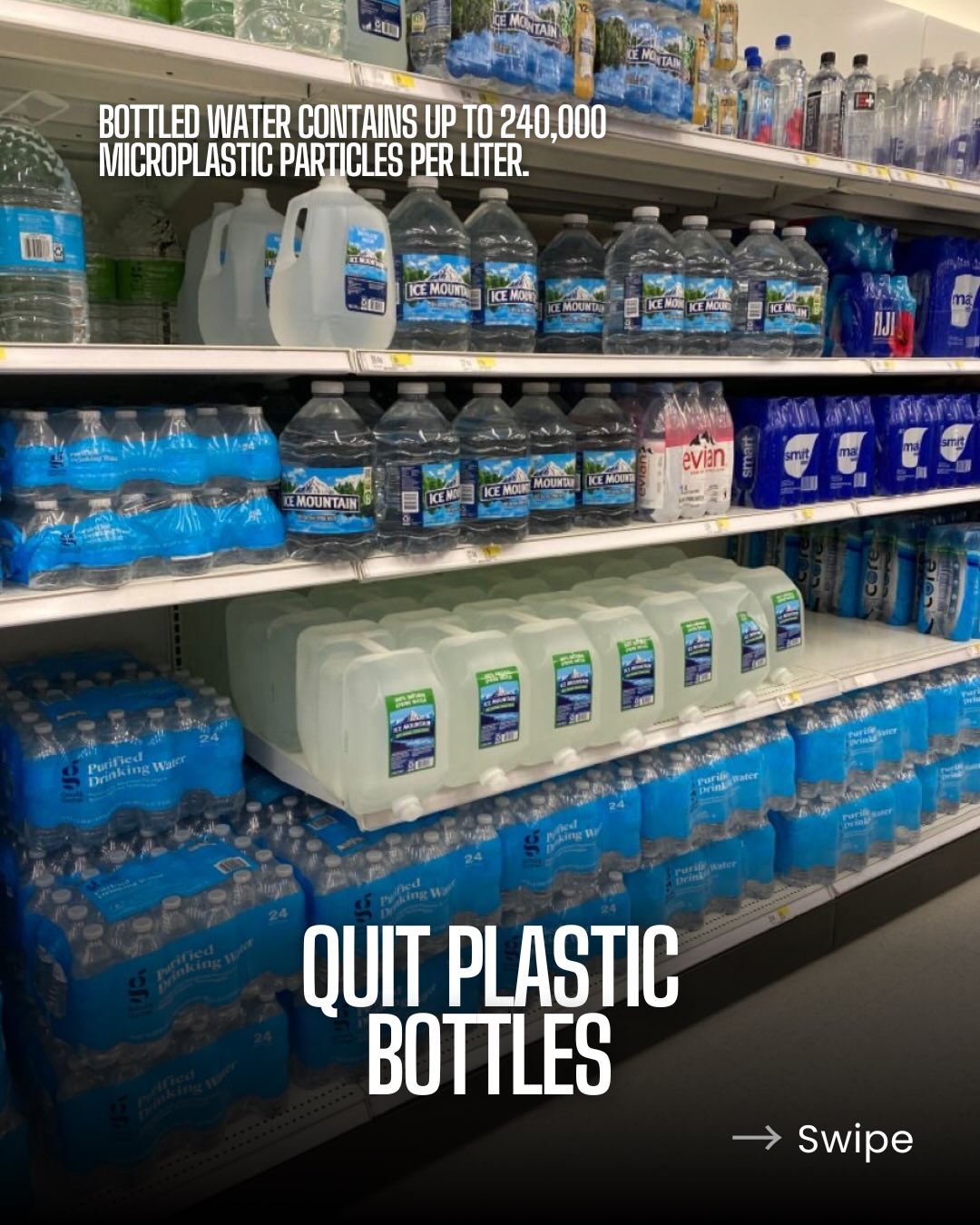
"בקבוקי מים מכילים עד 240,000 חלקיקי מיקרו-פלסטיק לליטר."
מסקנת הבדיקה:
מחקרים עדכניים, כולל ניתוחים כמותיים של חלקיקי ננו-פלסטיק בבקבוקי מים, מאשרים כי ריכוז החלקיקים יכול להגיע למאות אלפים לליטר, בהתאם לשיטות המדידה והסוגים שנבדקו. (🟩)
chevron_right מקורות מדעיים: (2)
-
link
Rapid single-particle chemical imaging of nanoplastics by SRS microscopy.
Plastics are now omnipresent in our daily lives. The existence of microplastics (1 µm to 5 mm in length) and possibly even nanoplastics (<1 μm) has recently raised health concerns. In particular, nanoplastics are believed to be more toxic since their smaller size renders them much more amenable, compared to microplastics, to enter the human body. However, detecting nanoplastics imposes tremendous analytical challenges on both the nano-level sensitivity and the plastic-identifying specificity, leading to a knowledge gap in this mysterious nanoworld surrounding us. To address these challenges, we developed a hyperspectral stimulated Raman scattering (SRS) imaging platform with an automated plastic identification algorithm that allows micro-nano plastic analysis at the single-particle level with high chemical specificity and throughput. We first validated the sensitivity enhancement of the narrow band of SRS to enable high-speed single nanoplastic detection below 100 nm. We then devised a data-driven spectral matching algorithm to address spectral identification challenges imposed by sensitive narrow-band hyperspectral imaging and achieve robust determination of common plastic polymers. With the established technique, we studied the micro-nano plastics from bottled water as a model system. We successfully detected and identified nanoplastics from major plastic types. Micro-nano plastics concentrations were estimated to be about 2.4 ± 1.3 × 10…
PMID: 38190543
-
link
Quantitative modeling of nanoplastic accumulation from single-use water bottles: exposure scenarios and tissue concentration estimates.
The widespread use of single-use plastic (SUP) water bottles has raised growing concerns about chronic human exposure to nanoplastics (NPs). This study presents a quantitative assessment of NP accumulation in human tissues resulting from the long-term consumption of SUP water bottles. Using survey-derived consumption data and the Human Exposure and Absorption Simulation Interface (HEASI) Plastic Model, we modeled NP intake, gastrointestinal (GI) retention, and whole-body tissue accumulation under steady-state conditions. Three exposure scenarios were developed based on published NP concentration data in SUP water bottles, ranging from 1.10 × 10<sup>5</sup> to 1.0 × 10<sup>11</sup> particles/liter. Our findings reveal that whole-body tissue accumulation of NPs varies significantly with consumption habits and assumed biliary excretion rates, with modeled concentrations ranging from 0.00084 to 226.68 μg/L. These values represent the steady-state amount of nanoplastics absorbed into systemic circulation and retained in tissues, rather than simply the intake rate. The conversion to μg/L was based on the average mass per particle and reflects internal exposure levels relevant to toxicological assessment. The study also estimates NP concentrations in the GI tract and stool, highlighting substantial variability across exposure scenarios. Log₁₀ analysis of NP concentrations indicates a dose-dependent accumulation trend, particularly under high-consumption and high-exposure scenarios, although some variability is observed in lower exposure brackets due to the dynamics of the kinetic model. Polyamide and polystyrene were modeled as the most prevalent NP types in tissues, based on their relative abundance in SUP water bottles; however, this extrapolation assumes uniform uptake and retention across polymers and should be interpreted with caution. These results suggest that chronic exposure to NPs from SUP water bottles may pose potential health risks, especially in populations with high consumption rates. This study calls for the development of regulatory benchmarks, improved detection methods, and reduced use of SUP water bottles to limit NP exposure and protect public health.…
PMID: 42007012
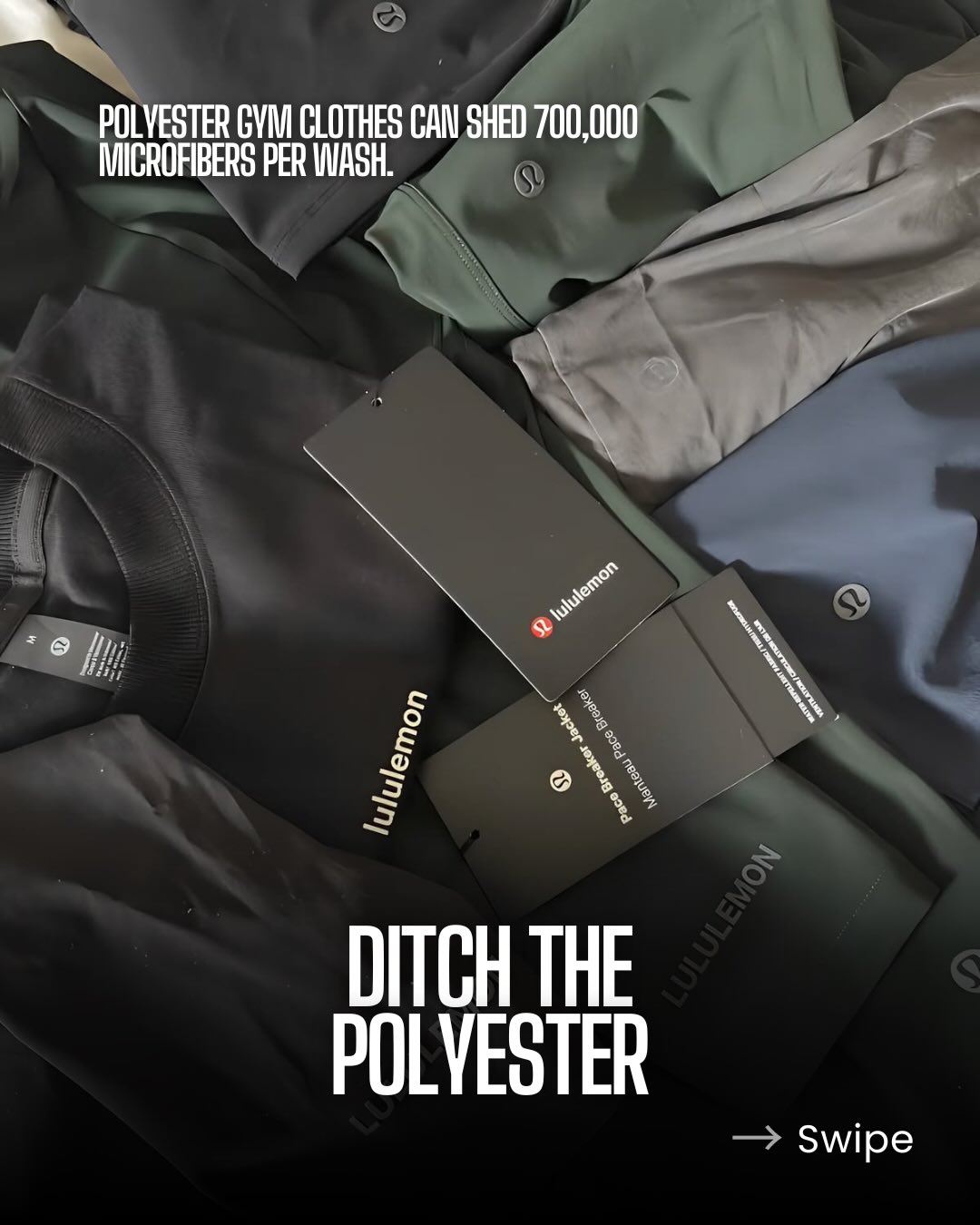
"בגדי אימון מפוליאסטר משירים עד 700,000 סיבי מיקרו-פלסטיק בכל כביסה."
מסקנת הבדיקה:
מחקרים בתחום הטקסטיל מאשרים כי כביסה של בגדים סינתטיים, ובפרט פוליאסטר, משחררת כמות משמעותית של סיבי מיקרו-פלסטיק, כאשר הערכות מגיעות למיליוני סיבים למחזור כביסה, מה שתומך בטענה של עד 700,000 סיבים. (🟩)
chevron_right מקורות מדעיים: (2)
-
link
Domestic laundry and microfiber pollution: Exploring fiber shedding from consumer apparel textiles.
Synthetic fibers are increasingly seen to dominate microplastic pollution profiles in aquatic environments, with evidence pointing to textiles as a potentially important source. However, the loss of microfibers from textiles during laundry is poorly understood. We evaluated microfiber release from a variety of synthetic and natural consumer apparel textile samples (n = 37), with different material types, constructions, and treatments during five consecutive domestic laundry cycles. Microfiber loss ranged from 9.6 mg to 1,240 mg kg-1 of textile per wash, or an estimated 8,809 to > 6,877,000 microfibers. Mechanically-treated polyester samples, dominated by fleeces and jerseys, released six times more microfibers (161 ± 173 mg kg-1 per wash) than did nylon samples with woven construction and filamentous yarns (27 ± 14 mg kg-1 per wash). Fiber shedding was positively correlated with fabric thickness for nylon and polyester. Interestingly, cotton and wool textiles also shed large amounts of microfibers (165 ± 44 mg kg-1 per wash). The similarity between the average width of textile fibers here (12.4 ± 4.5 μm) and those found in ocean samples provides support for the notion that home laundry is an important source of microfiber pollution. Evaluation of two marketed laundry lint traps provided insight into intervention options for the home, with retention of up to 90% for polyester fibers and 46% for nylon fibers. Our observation of a > 850-fold difference in the number of microfibers lost between low and high shedding textiles illustrates the strong potential for intervention, including more sustainable clothing design.…
PMID: 34242234
-
link
Microfiber release from different fabrics during washing.
Microfiber is a subgroup of microplastics and accounts for a large proportion of microplastics in aquatic environment, especially in municipal effluents. The purpose of the present study was to quantify microfiber shedding from three most populate synthetic textile fabrics: polyester, polyamide, and acetate fabrics. The results showed that more microfibers were released after washing with a pulsator laundry machine than a platen laundry machine. The greatest number of microfibers was released from acetate fabric, which was up to 74,816 ± 10,656 microfibers/m…
PMID: 30884392
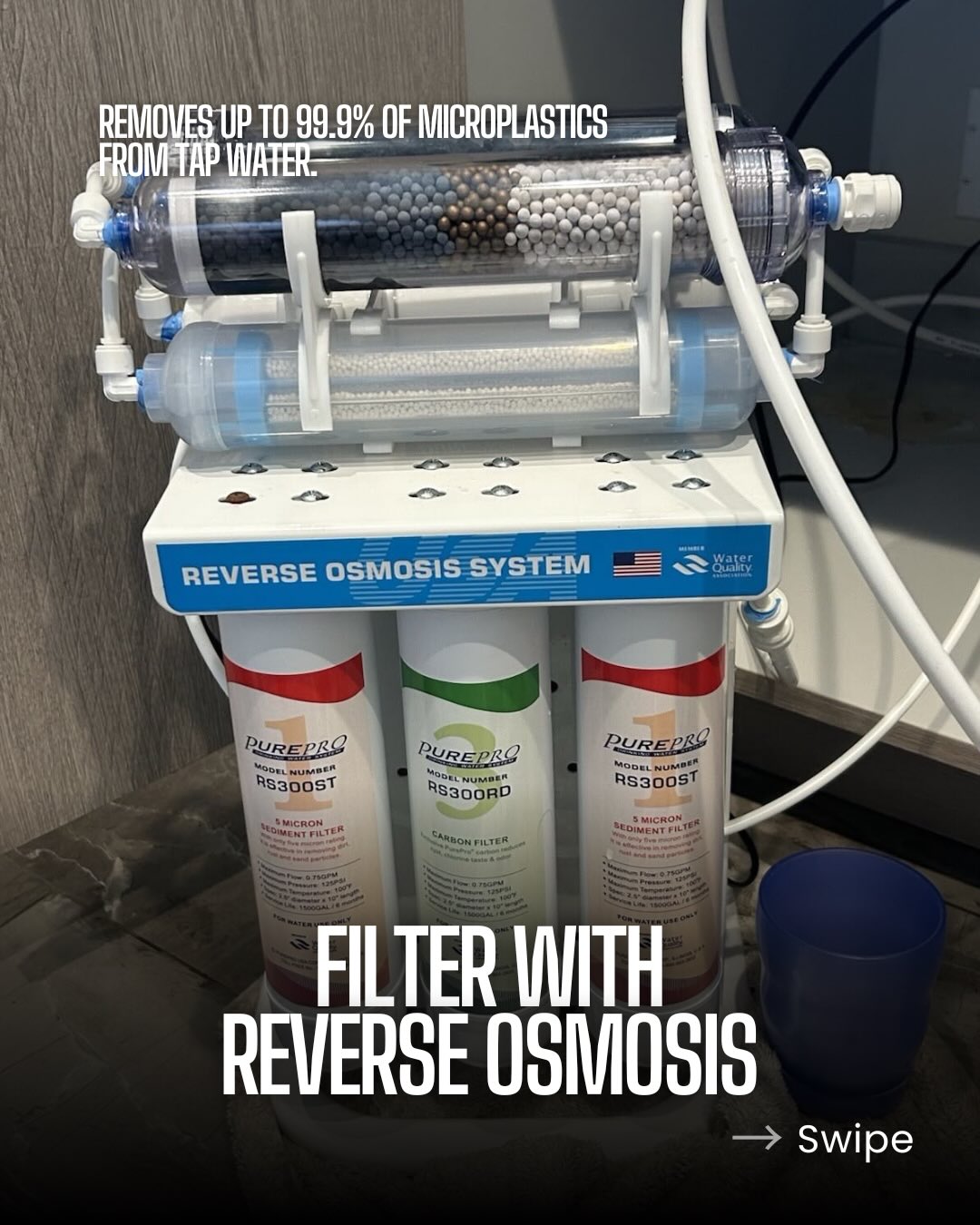
"מערכת אוסמוזה הפוכה מסירה עד 99.9% מהמיקרו-פלסטיק ממי הברז."
מסקנת הבדיקה:
טכנולוגיות ממברנה מתקדמות, ובפרט אוסמוזה הפוכה (RO), נחשבות ליעילות ביותר בהסרת חלקיקים זעירים מהמים, ומחקרים מצביעים על יעילות גבוהה מאוד בהסרת מיקרו-פלסטיק, התואמת את הנתון של 99.9%. (🟩)
chevron_right מקורות מדעיים: (2)
-
link
A review of microplastic removal from water and wastewater by membrane technologies.
Microplastics (MPs) cannot be completely removed from water/wastewater in conventional wastewater treatment plants (WWTPs) and drinking water treatment plants (DWTPs). According to the literature analysis, membrane technologies, one of the advanced treatment technologies, are the most effective and promising technologies for MP removal from water and wastewater. In this paper, firstly, the properties of MPs commonly present in WWTPs/DWTPs and the MP removal efficiency of WWTPs/DWTPs are briefly reviewed. In addition, research studies on MP removal from water/wastewater by microfiltration (MF), ultrafiltration (UF), nanofiltration (NF), reverse osmosis (RO), and membrane bioreactors (MBRs) are reviewed. In the next section, membrane filtration is compared with other methods used for MP removal from water/wastewater, and the advantages/disadvantages of the removal methods are discussed. Moreover, the problem of membrane fouling with MPs during filtration and the potential for MP release from polymeric membrane structure to water/wastewater are discussed. Finally, based on the studies in the literature, the current status and research deficiencies of MP removal by membrane technologies are identified, and recommendations are made for further studies.…
PMID: 37452543
-
link
Remediation of Micro- and Nanoplastics by Membrane Technologies.
Micro- and nanoplastics (NPs) cannot be completely removed from water/wastewater in conventional wastewater treatment plants (WWTPs) and drinking water treatment plants (DWTPs). According to the literature analysis, membrane processes, one of the advanced treatment technologies, are the most effective and promising technologies for the removal of microplastics (MPs) from water and wastewater. In this article, firstly, the properties of MPs commonly found in water and wastewater treatment and their removal efficiencies are briefly reviewed. In addition, research on the use of microfiltration (MF), ultrafiltration (UF), nanofiltration (NF), reverse osmosis (RO), and membrane bioreactors (MBR) for the remediation of MPs and NPs from water/wastewater is reviewed, and the advantages/disadvantages of each removal method are discussed. Membrane filtration is also compared with other methods used to remove MPs. Furthermore, the problem of membrane fouling by MPs during filtration and the potential for MPs to be released from the polymeric membrane structure are discussed. Finally, based on the literature survey, the current status and gaps in research on MPs removal by membrane technologies are identified, and recommendations for further research are made.…
PMID: 40137034



עירעור על דוח זה
ספקו ראיות חדשות או הצביעו על אי דיוקים
נעדכן אותך על תוצאות הבדיקה
הוסיפו קישורים למחקרים או מקורות רפואיים מוכרים
העירעור נשלח בהצלחה!
המנוע המדעי שלנו יבדוק את הראיות שהגשתם. נעדכן אתכם באימייל עם התוצאות.
ניתוח מבוסס בינה מלאכותית
דוח זה נוצר באופן אוטומטי על ידי מערכת בינה מלאכותית ועשוי להכיל שגיאות, אי-דיוקים או מידע חלקי. הניתוח אינו מהווה ייעוץ רפואי, אבחנה או המלצה לטיפול, והוא אינו תחליף לדעתו של איש מקצוע רפואי מוסמך. יש להתייעץ עם רופא או מומחה מוסמך לפני קבלת כל החלטה רפואית. המידע מוצג לצרכי מידע כללי בלבד.
מידע זה מופק על ידי בינה מלאכותית ואינו מהווה תחליף לייעוץ רפואי מקצועי.