סריקה בתהליך...
הניתוח עשוי לארוך 30–90 שניות
הידעת?
הסרטון אינו מכיל תוכן רפואי
חושבים שחלה טעות?
אם לדעתכם הסרטון אכן עוסק בטענות רפואיות או בריאותיות, הוסיפו הסבר קצר ושלחו בקשה לבדיקה מחדש.
הבקשה התקבלה! נבדוק את הסרטון ונחזור אליכם.
אירעה שגיאה בשליחת הבקשה. נסו שוב.
דו״ח מאומת
הסרטון מציג מידע מדויק ומגובה במחקרים מדעיים אמינים.
סיכום
כל הטענות שנבדקו נמצאו מאומתות על ידי הספרות המדעית הקיימת ב-PubMed. הטענות משקפות ידע רפואי מקובל בנוגע לשימוש בסימנים חיצוניים (לשון, שתן, ציפורניים, תנוחות שינה ושיטת ABCDE) ככלי עזר לאבחון או לניהול מצבים בריאותיים.
analytics ניתוח טענות מבוסס ראיות
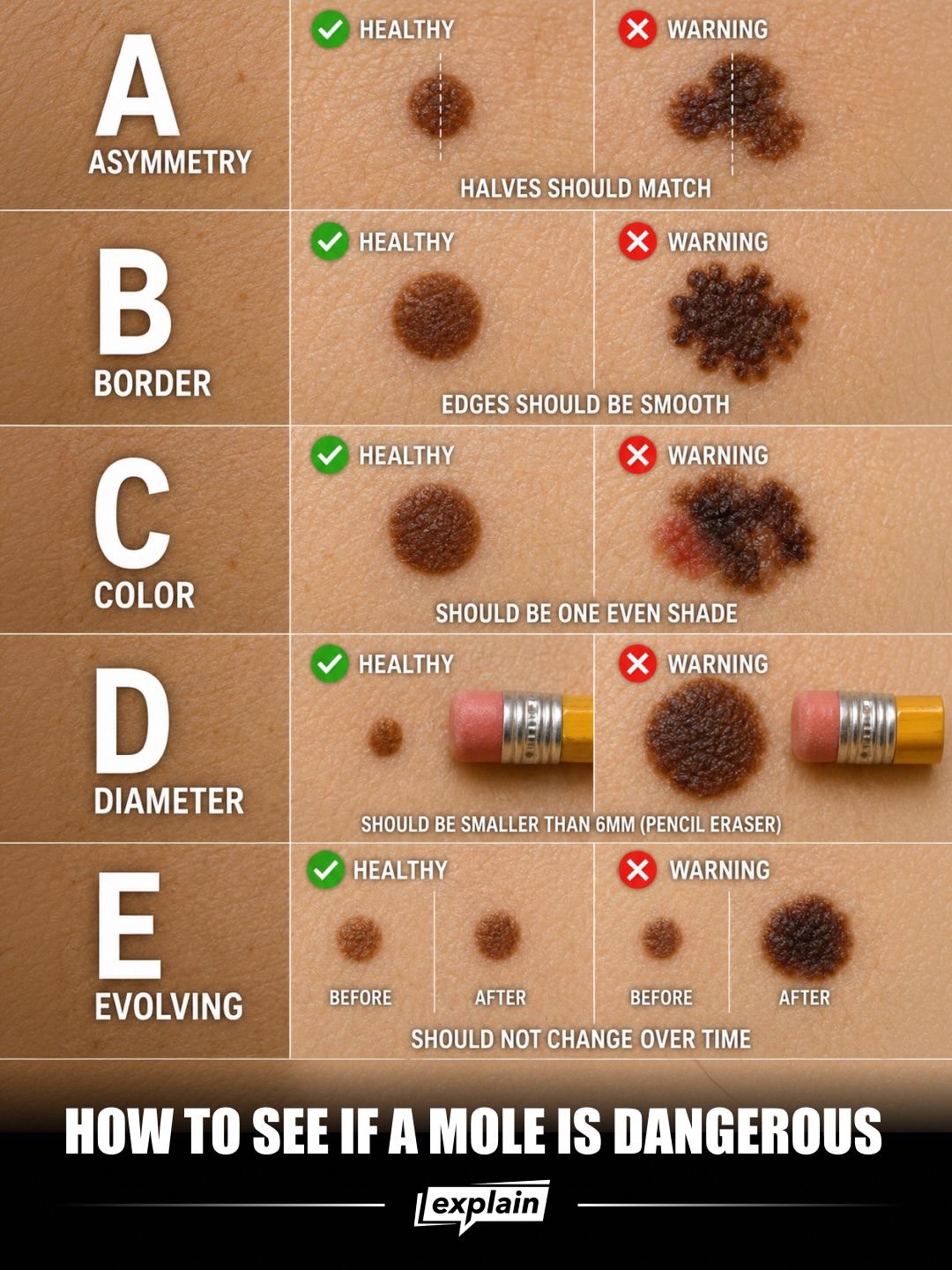
"שיטת ABCDE (אסימטריה, גבולות, צבע, קוטר, שינוי) היא כלי עזר לזיהוי שומות חשודות שדורשות בדיקה רפואית."
מסקנת הבדיקה:
שיטת ה-ABCDE היא כלי עזר קליני מוכר ומקובל בספרות הרפואית להערכת נגעים פיגמנטיים וזיהוי חשד למלנומה, כפי שמאושר במחקרים קליניים. (🟩)
chevron_right מקורות מדעיים: (2)
-
link
Cutaneous malignant melanoma: a primary care perspective.
Cutaneous malignant melanoma accounts for 3 to 5 percent of all skin cancers and is responsible for approximately 75 percent of all deaths from skin cancer. Persons with an increased number of moles, dysplastic (also called atypical) nevi, or a family history of the disease are at increased risk compared with the general population. An important tool to assist in the evaluation of potential melanomas for patients and health care professionals is the ABCDE mnemonic, which takes into account asymmetry, border irregularities, color variation, diameter, and evolution. Any suspicious pigmented lesion should be biopsied. Appropriate methods of biopsy can vary, and include deep shave, punch, and excisional biopsy. Regardless of the procedure selected, it is essential that the size of the specimen be adequate to determine the histologic depth of lesion penetration, which is known as the Breslow depth. The Breslow depth is the most important prognostic parameter in evaluating the primary tumor. Because early detection and treatment can lead to identification of thinner lesions, which may increase survival, it is critical that physicians be comfortable with evaluating suspicious pigmented lesions and providing treatment or referral as necessary.…
PMID: 22335216
-
link
Patient perspectives of early detection of melanoma: the experience at the Brescia Melanoma Centre, Italy.
Skin self-examination is usually recommended for early melanoma diagnosis. Given the current lack of a standardized Skin Self-Examination method, we raised the issue about the suitable approach to explain to patients what can be considered a suspicious lesion. Hereinafter, we report the results of a pilot-study carried out at the Melanoma Centre, University Hospital Spedali Civili Brescia, Italy. A consecutive sample of 200 melanoma patients entered into the Melanoma Prevention Project. A detailed survey revealed who had the first suspicion of the melanoma lesion. When melanoma was Self- or Relative-detected, we investigated the signs/symptoms that had alerted patients with reference to the ABCDE rule. The study included also socio-demographic variables, family history of melanoma, skin type, number and type of nevi, and melanoma features. Eighty-seven melanoma had been Self-Detected and 44 Relative-Detected. Patients report most commonly signs/symptoms such as dark colour (58%) and changing in size (47%). Seventy-nine percent of these patients have less than ten nevi and 92% have small and regular moles. Sometimes the signs of melanoma seem to be easy to identify. Our patients say that they recognized melanoma on the base of the Colour and the Change in size. Therefore, we propose the short "CC" acronym that could facilitate the melanoma self-diagnosis. The aim is to give a short and effective message that leads patients to have the doubt of a suspicious lesion of melanoma so that they seek medical attention.…
PMID: 24825405
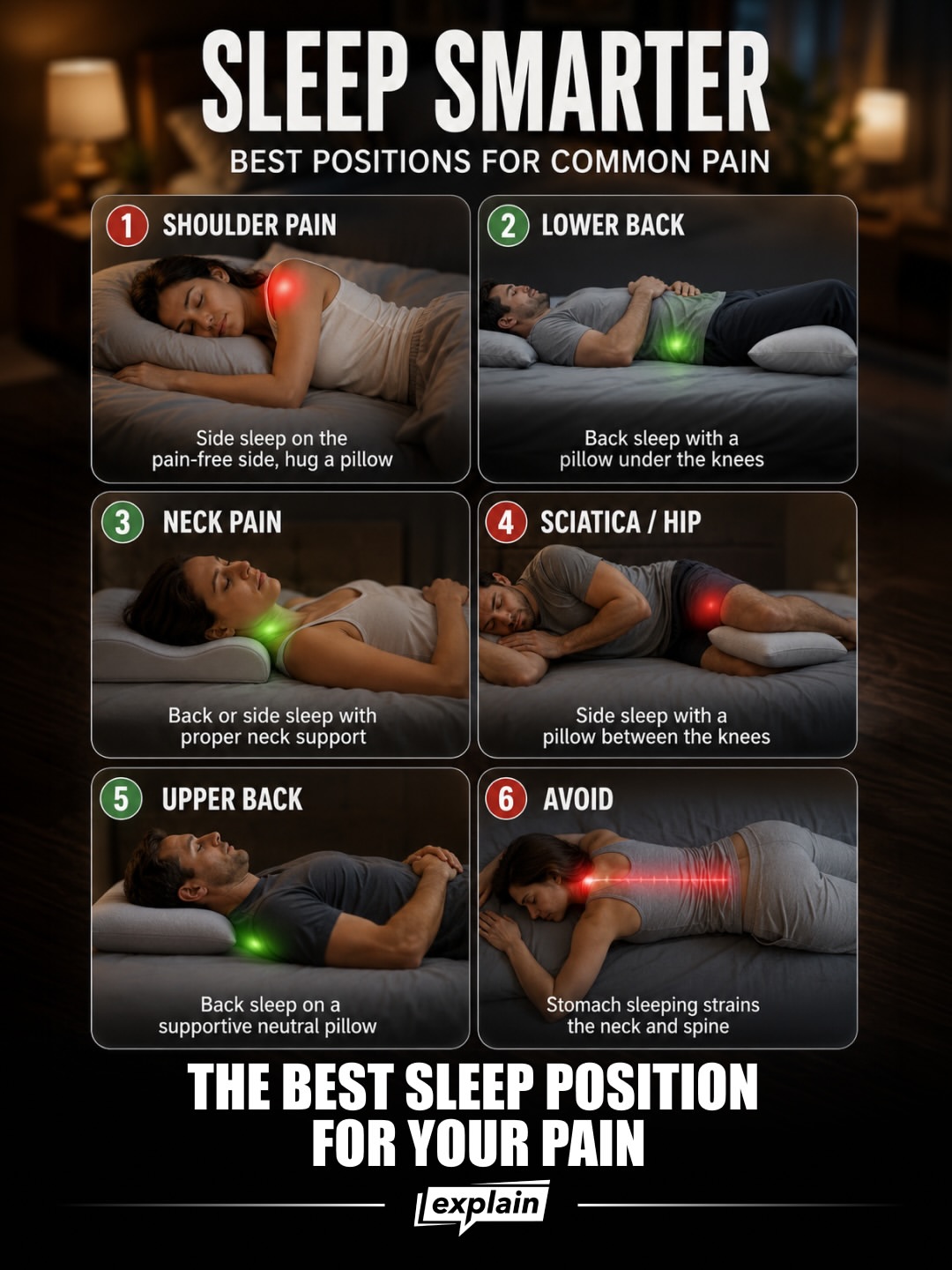
"תנוחות שינה מסוימות, כגון שינה על הצד עם כרית לכאבי כתפיים או שינה על הגב עם כרית מתחת לברכיים לכאבי גב תחתון, עשויות להקל על כאבים נפוצים."
מסקנת הבדיקה:
המלצות ארגונומיות לשינוי תנוחות שינה (כגון שימוש בכריות לתמיכה) הן פרקטיקה מקובלת להקלה על כאבי שריר-שלד נפוצים, אם כי הטיפול בכאב כרוני דורש לעיתים התערבות רפואית מקיפה יותר. (🟩)
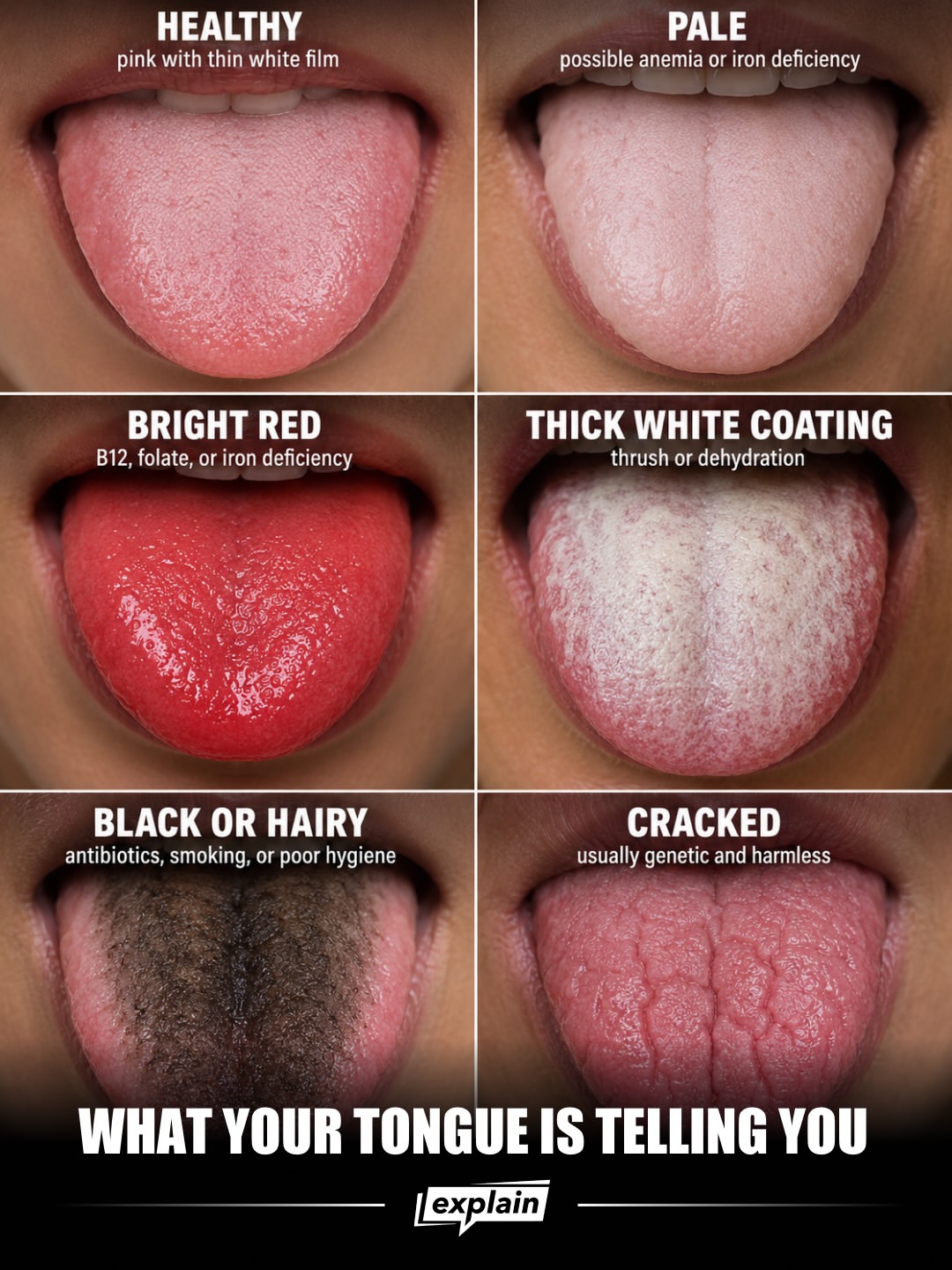
"מראה הלשון (צבע, ציפוי, מרקם) יכול להעיד על מצבים בריאותיים שונים, כולל חסרים תזונתיים, התייבשות או זיהומים."
מסקנת הבדיקה:
מראה הלשון (צבע, ציפוי ומרקם) מוכר ברפואה כסממן קליני שיכול להעיד על מצבים סיסטמיים, חסרים תזונתיים, זיהומים או מחלות מטבוליות. (🟩)
chevron_right מקורות מדעיים: (2)
-
link
Oral health and cardiometabolic disease: understanding the relationship.
Examination of the oral cavity can identify clinical signs indicative of underlying systemic disease. Key features to examine include the general appearance and number of the teeth, signs of inflammation of the mucosa or gingival tissues including bleeding of the gums and redness, swelling or hyperplasia. Additionally, the tongue should be assessed for any ulceration or discolouration and the presence of excessive build-up (coating). Cardiovascular disease and diabetes, together known as cardiometabolic disease have an impact on oral health. Similarly, oral health conditions, such as gum disease (periodontitis) and dryness of the mouth (xerostomia), are associated with an increased risk for both cardiovascular disease and type 2 diabetes mellitus. The aim of this narrative review is to outline both the impact of periodontitis and xerostomia on cardiometabolic disease and the impact of cardiometabolic health on these oral health conditions. Key features of periodontitis and xerostomia will be provided along with a brief discussion of current concepts in early prevention and management of these oral health conditions. The biological mechanisms linking cardiometabolic disease and periodontitis will be outlined and the evidence supporting the association between cardiometabolic disease and oral health conditions will be presented together with an identification of areas where further research is indicated. Last, guidance for general practitioners to assess and support early diagnosis and management of oral health conditions by raising awareness of the relationship between oral health and cardiometabolic disease, providing simple oral health advice and referring to a dental practitioner will be presented.…
PMID: 35187824
-
link
Tongue Image Analysis and Clinical Data Fusion: A Novel Approach for Non-invasive Diagnosis of Metabolic Dysfunction-associated Fatty Liver Disease.
<h4>Background and aims</h4>Metabolic dysfunction-associated fatty liver disease (MAFLD) represents a predominant cause of chronic liver disease, underscoring the demand for accessible, non-invasive diagnostic tools. Tongue diagnosis in Traditional Chinese Medicine provides a distinctive perspective on systemic health, though it remains largely subjective. This study aimed to develop an interpretable multimodal deep learning model for MAFLD screening by integrating quantitative tongue image features with routine clinical data.<h4>Methods</h4>From 904 screened candidates, 477 subjects (157 healthy, 320 MAFLD) were included and randomly allocated to training, validation, and test sets in an 8:1:1 ratio. All participants underwent standardized tongue imaging (International Commission on Illumination <i>L*a*b</i> color features) and comprehensive clinical evaluation. We constructed a dual-stream deep learning model, combining a ConvNeXt-Tiny network for tongue images and a multilayer perceptron for clinical variables. Feature fusion was achieved via a Dynamic Affine Feature Transformation module, and the model was trained using weighted cross-entropy loss.<h4>Results</h4>MAFLD patients showed significant metabolic abnormalities compared to healthy controls. A progressive decrease in tongue yellowness (b* value) was observed with advancing fibrosis. On an independent test set (n = 48), the multimodal model achieved 97.92% accuracy, Quadratic Weighted Kappa of 0.9538, and 96.88% sensitivity, and 100% specificity, outperforming single-modality and serological models. Interpretability analyses confirmed the model's focus on clinically relevant tongue regions and key metabolic drivers.<h4>Conclusions</h4>We developed an accurate and interpretable multimodal model that synergizes tongue image features with metabolic indicators for MAFLD screening. This approach presents a promising, low-cost tool potentially well-suited for resource-limited settings.…
PMID: 42181845
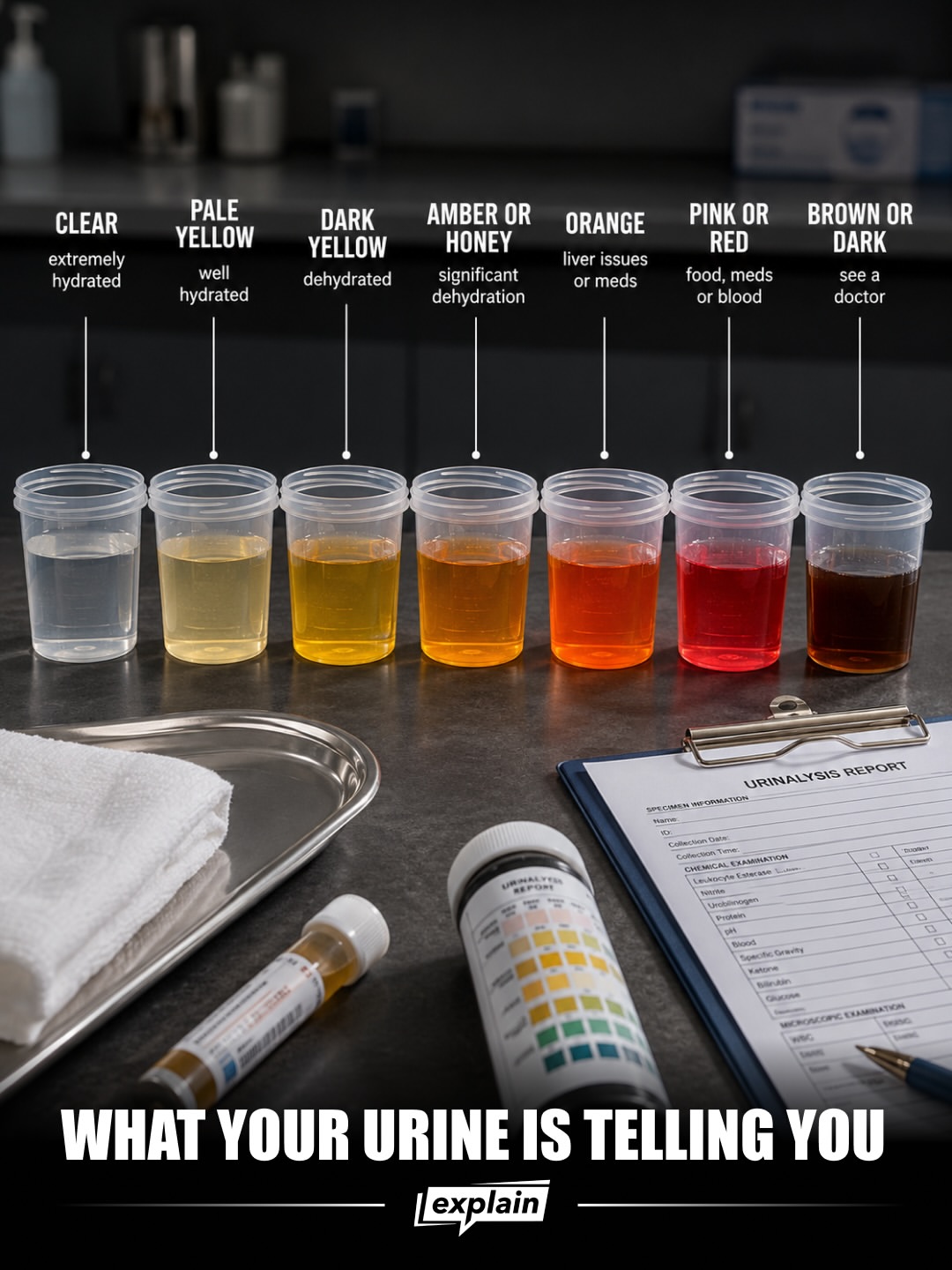
"צבע השתן מהווה אינדיקטור למצב ההידרציה בגוף ועשוי להצביע על בעיות בריאותיות שונות, כגון בעיות בכבד או נוכחות דם."
מסקנת הבדיקה:
צבע השתן הוא מדד מקובל ומהימן להערכת רמת הידרציה (נוזלים) בגוף, ושינויים חריגים בצבעו עשויים להצביע על בעיות רפואיות כגון מחלות כבד או נוכחות דם. (🟩)
chevron_right מקורות מדעיים: (2)
-
link
Assessing hydration status.
Understanding the importance of euhydration in humans in order to ensure good health in various situations, the purpose of this review is to examine the available techniques in assessing hydration status. During the past 20 years, many indices have been developed to assess hydration levels accurately in humans. Changes in body weight, haematological and urine parameters, bioelectrical impedance, skinfold thickness, heart rate and blood pressure changes are among these indices. Plasma osmolality, urine osmolality and urine specific gravity are the most widely used markers of hydration. However, urine colour has also been used with reasonable accuracy when laboratory analysis is not available or when a quick estimate of hydration is necessary. Some data indicate that urine colour is as good indicator of hydration as plasma or urine osmolality or urine specific gravity. Although there is no 'gold standard' for assessment of hydration status, it appears that changes in body weight, along with urine osmolality, specific gravity, conductivity and colour are among the most widely used indices. Furthermore, they provide reasonable results, especially when the analysis is based on the first morning urine sample.…
PMID: 12172475
-
link
The Relationship between %BML, Urine Color, Thirst Level and Urine Indices of Hydration Status.
Dehydration is known to impair health, quality of daily life, and exercise performance [<xref ref-type="bibr" rid="ref1">1</xref>]. While several methods are utilized to assess fluid balance, there is no gold standard to assess hydration status [<xref ref-type="bibr" rid="ref2">2</xref>]. Cheuvront and Kenefick [<xref ref-type="bibr" rid="ref3">3</xref>] suggested the use of a Venn diagram, which consists of % body mass weight (BML), urine color, and thirst level (WUT) to measure hydration status and fluid needs. However, no study to date has examined the relationship between the WUT criteria and hydration status measured by urine indices. The purpose of this study was to investigate the relationships between urine-specific gravity (USG), urine osmolality (UOSM), and the WUT criteria. Twenty-two females (mean ± SD; age, 20 ± 1 year; weight, 65.4 ± 12.6 kg) and twenty-one males (age, 21 ± 1 year; body mass, 78.7 ± 14.6 kg) participated in this study. First-morning body mass, urine color, USG, UOSM, and thirst level were collected for 10 consecutive days. First 3 days were utilized to establish a euhydrated baseline body weight. %BML >1%, urine color >5, and thirst level ≥5 were used as the dehydration thresholds. The number of markers that indicated dehydration levels was summed when each variable met each threshold. One-way ANOVA with Tukey pairwise comparison was used to assess the differences in USG and UOSM, followed by a calculation of effect size (ES). Figure <xref ref-type="fig" rid="f01">1</xref> indicates the differences of UOSM based on the WUT criteria. For UOSM, "2 markers indicated" (mean [M] ± SD [ES], 705 ± 253 mOsmol [0.43], p = 0.018) was significantly higher than "1 marker indicated" (M ± SD, 597 ± 253 mOsmol). Additionally, "zero marker indicated" (509 ± 249 mOsmol) was significantly lower than "3 markers indicated" (M ± SD [ES], 761 ± 250 mOsmol, [1.01], p = 0.02) and "2 markers indicated" ([ES], [0.78], p = 0.004). However, there was no statistical difference between "3 markers indicated" ([ES], [0.65], p = 0.13) and "1 marker indicated." For USG, "3 markers indicated" (M ± SD [ES], 1.021 ± 0.007 [0.57], p = 0.025) and "2 markers indicated" (M ± SD [ES], 1.019 ± 0.010 [0.31], p = 0.026) were significantly higher than "1 marker indicated" (M ± SD, 1.016 ± 0.009). Additionally, "zero marker indicated" (1.014 ± 0.005) was significantly lower than "3 markers indicated" ([ES], [1.21], p = 0.005) and "2 markers indicated" ([ES], [0.54], p = 0.009). When 3 markers indicated dehydration levels, UOSM and USG were greater than euhydrated cut points. When 2 markers indicated dehydration levels, USG was higher than the euhydrated cut point. Additionally, UOSM and USG were significantly lower when zero or 1 marker indicated dehydration levels. Thus, the WUT criteria are a useful tool to assess hydration status. Athletes, coaches, sports scientists, and medical professions can use this strategy in the field settings to optimize their performance and health without consuming money and time.…
PMID: 33780927
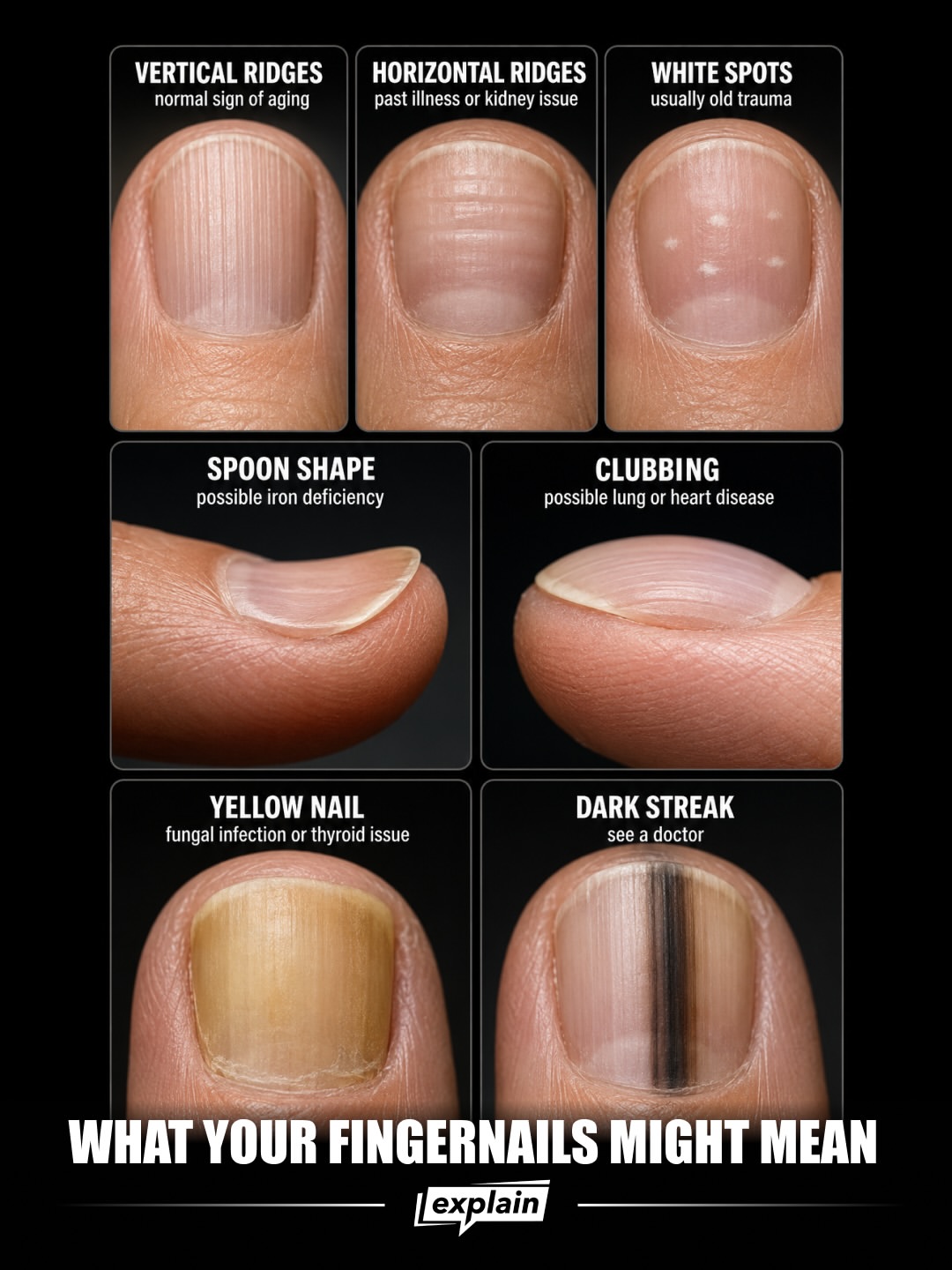
"שינויים במראה הציפורניים, כגון התעבות (Clubbing), צורת כף (Spoon shape) או פסים כהים, עשויים להוות סימנים למחלות מערכתיות, מחלות לב או ריאה, או חסרים תזונתיים."
מסקנת הבדיקה:
שינויים במבנה ובמראה הציפורניים (כמו התעבות, צורת כף או פסים) הם סימנים קליניים מוכרים שיכולים להעיד על מחלות פנימיות, לב, ריאות או חסרים תזונתיים. (🟩)
chevron_right מקורות מדעיים: (2)
-
link
Nail abnormalities associated with systemic pathologies.
Nail abnormalities can arise in conjunction with or as a result of systematic pathologies. These pathologies include single-organ diseases, multisystemic diseases, and drug-induced insults. Clinical signs associated with these conditions include dyschromias, vascular alterations, periungual tissue changes, textural dystrophies, contour alterations, and growth-rate alterations. The associated systemic pathologies may affect any part of the nail apparatus, including the nail matrix, the nail plate, the nail bed, the underlying vasculature, and the periungual tissues. The anatomical location and extent of damage determine the clinically manifested anomaly.…
PMID: 24079592
-
link
Nail disorders as clues to systemic disease.
Disorders of the nail unit can provide important clues to underlying systemic diseases. Onychodystrophy or nail abnormalities include altered nail color, shape, or texture with morphology and growth patterns often related to local anatomic factors such as edema, vascular supply, and neurologic innervation. Associated pain or loss-of-function can also affect daily activities. Because nail changes may be due to a range of systemic diseases, the authors provide a systems-based broad overview of the common nail findings in patients with internal disease.…
PMID: 39694199

Memes
דירוג זה מבוסס על 2 דוחות אימות קודמים.


האם הדוח הזה היה מועיל לך?
מה היה פחות טוב? (רשות)
תודה על הפידבק!
עירעור על דוח זה
ספקו ראיות חדשות או הצביעו על אי דיוקים
נעדכן אותך על תוצאות הבדיקה
הוסיפו קישורים למחקרים או מקורות רפואיים מוכרים
העירעור נשלח בהצלחה!
המנוע המדעי שלנו יבדוק את הראיות שהגשתם. נעדכן אתכם באימייל עם התוצאות.
ניתוח מבוסס בינה מלאכותית
דוח זה נוצר באופן אוטומטי על ידי מערכת בינה מלאכותית ועשוי להכיל שגיאות, אי-דיוקים או מידע חלקי. הניתוח אינו מהווה ייעוץ רפואי, אבחנה או המלצה לטיפול, והוא אינו תחליף לדעתו של איש מקצוע רפואי מוסמך. יש להתייעץ עם רופא או מומחה מוסמך לפני קבלת כל החלטה רפואית. המידע מוצג לצרכי מידע כללי בלבד.
מידע זה מופק על ידי בינה מלאכותית ואינו מהווה תחליף לייעוץ רפואי מקצועי.